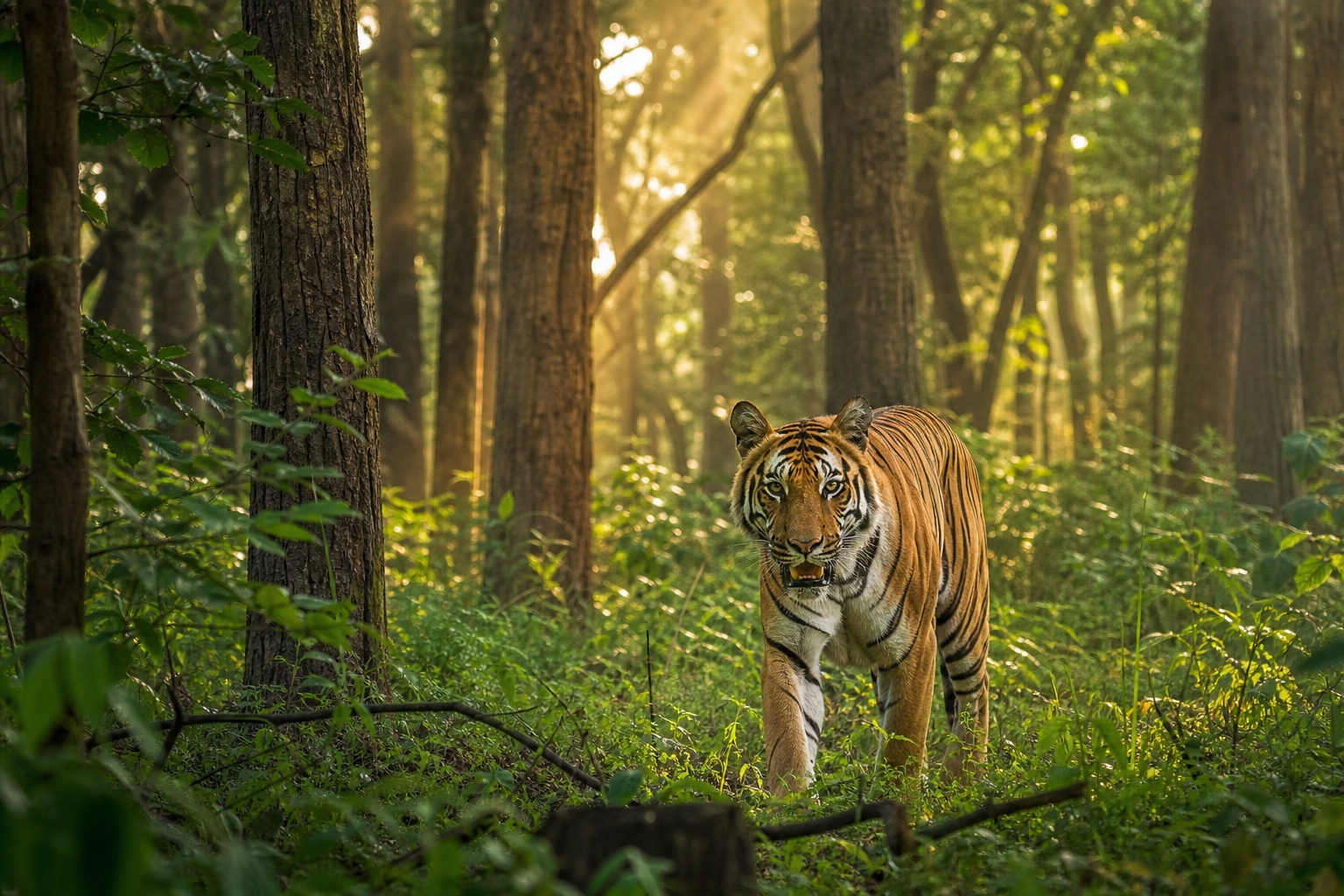
Majestic Bengal tiger walking through the dense teak forest of Tadoba Andhari Tiger Reserve, Chandrapur, Maharashtra

Maharashtra's Best-Kept Wild Secret

Discover Chandrapur

Tiger Capital of India • Ancient Gond Heritage • Sacred Temples • Unspoiled Nature

1,727 km² Tiger Reserve
80+ Royal Bengal Tigers
700+ yrs Gond History

Welcome to Chandrapur – The Tiger Capital of India

A destination that blends raw wilderness, ancient dynasties, spiritual devotion, and warm Vidarbha hospitality into one unforgettable journey.

Nestled in the south-eastern corner of Maharashtra, Chandrapur is one of India's most rewarding yet under-explored travel destinations. Straddling the banks of the Wardha and Irai rivers, this ancient city carries centuries of living history in its stone-carved temples, towering Gond fort walls, and the whispering teak forests that stretch towards the horizon in every direction. For those who seek authenticity over tourist-brochure predictability, Chandrapur offers something genuinely rare — a place where a Bengal tiger might cross the track just metres in front of your open jeep, where century-old temples still hum with daily ritual, and where the local Halbi and Gondi culture adds a cultural texture unlike anywhere else in India.

Chandrapur district covers approximately 11,443 square kilometres of Vidarbha, the eastern region of Maharashtra known for its cotton fields, coal mines, and extraordinary ecological diversity. The city itself sits at an elevation of roughly 188 metres above sea level and enjoys a tropical climate tempered by its proximity to the Deccan plateau. The Wardha River — one of the major tributaries of the Godavari — winds along the city's western edge, providing both scenic beauty and an important lifeline to the region's agricultural heartland.

The modern district of Chandrapur is home to approximately 2.2 million people and functions as both an administrative hub and an industrial centre, particularly famous for its coal mining and cement manufacturing. Yet despite this industrial character, Chandrapur has managed to preserve extraordinary pockets of natural beauty. The Tadoba Andhari Tiger Reserve, India's oldest and largest tiger reserve in Maharashtra, lies just 45 kilometres from the city centre and is widely regarded as one of the best places in the entire world to observe tigers in their natural habitat.

Whether you are a veteran wildlife photographer stalking the perfect tiger portrait at dawn, a history enthusiast tracing the ruins of the Gond kingdom, a devotee seeking blessings at the ancient Mahalaxmi temple, or simply a curious traveller searching for an experience off the beaten tourist trail — Chandrapur delivers far more than first impressions suggest. This guide is your comprehensive companion to discovering everything this extraordinary corner of Maharashtra has to offer.
Top Attractions in Chandrapur

From untamed jungles to sacred shrines — explore the rich tapestry of experiences that await you in Chandrapur.

Chandrapur Fort

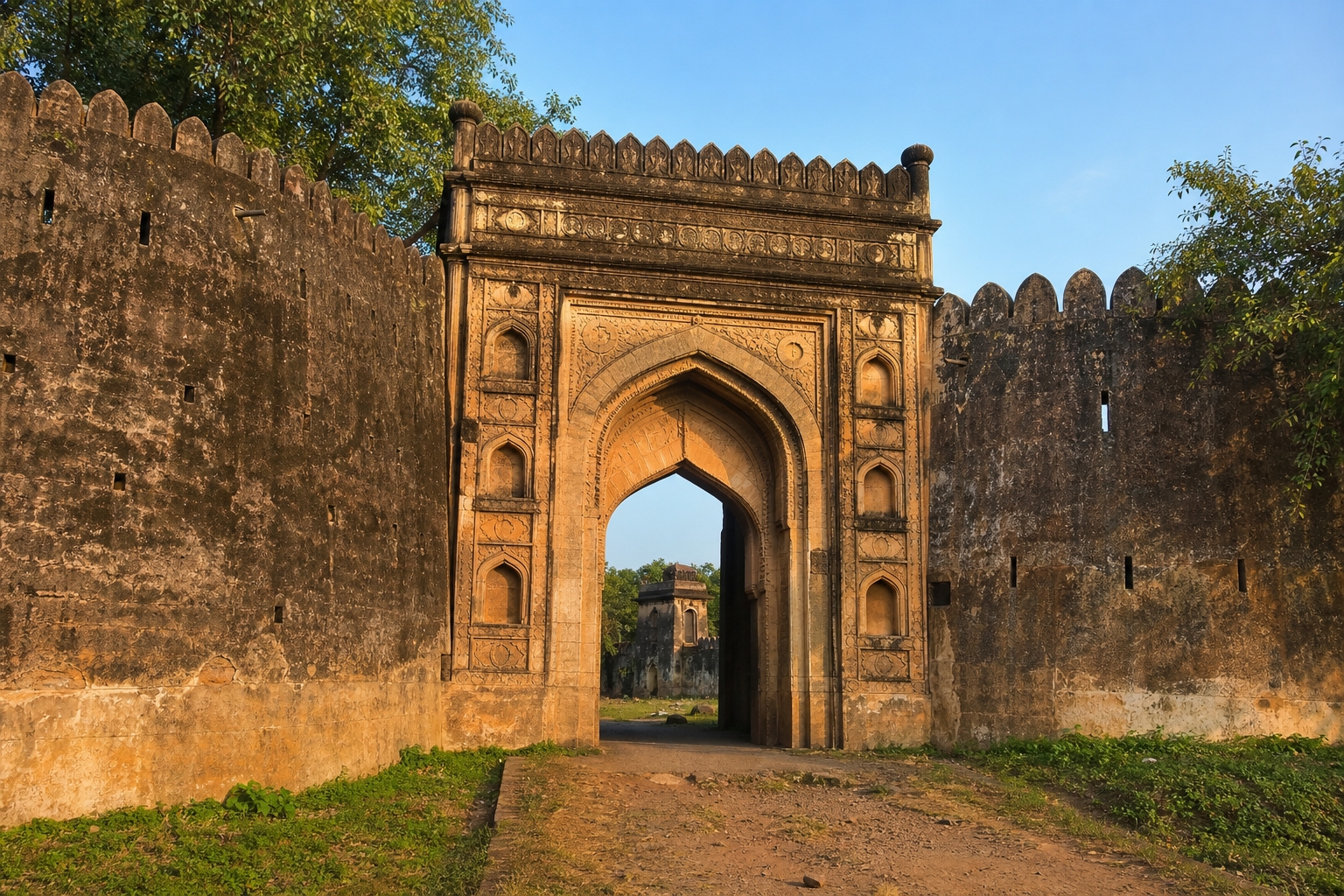
Built by the Gond king Khandkya Ballal Shah in the 13th century, the Chandrapur Fort is one of Maharashtra's most impressive medieval fortifications. The fort's massive stone walls once enclosed the entire city, and several of its original gates — including the iconic Pauni Gate and the Anchaleshwar Gate — still stand in remarkable condition. Walking through these ancient portals feels like stepping directly into the Gond kingdom's golden age. The fort complex also encloses several Hindu temples, palaces, and water tanks, making it an archaeological treasure trove of considerable significance.

Learn More →

Mahalaxmi Temple

The Mahalaxmi Temple, located within the ancient fort complex, is the spiritual heart of Chandrapur. Dedicated to the goddess Mahalaxmi — an incarnation of Devi — this revered shrine draws hundreds of thousands of devotees every year, particularly during the grand Mahalaxmi festival. The temple's architecture blends Hemadpanthi and Gond styles, featuring ornate stone carvings of floral motifs, celestial beings, and mythological scenes. The evening aarti, when oil lamps illuminate the inner sanctum and devotional music fills the air, is a deeply moving spiritual experience for visitors of all backgrounds.

Learn More →

Irai Wildlife Sanctuary & Dam

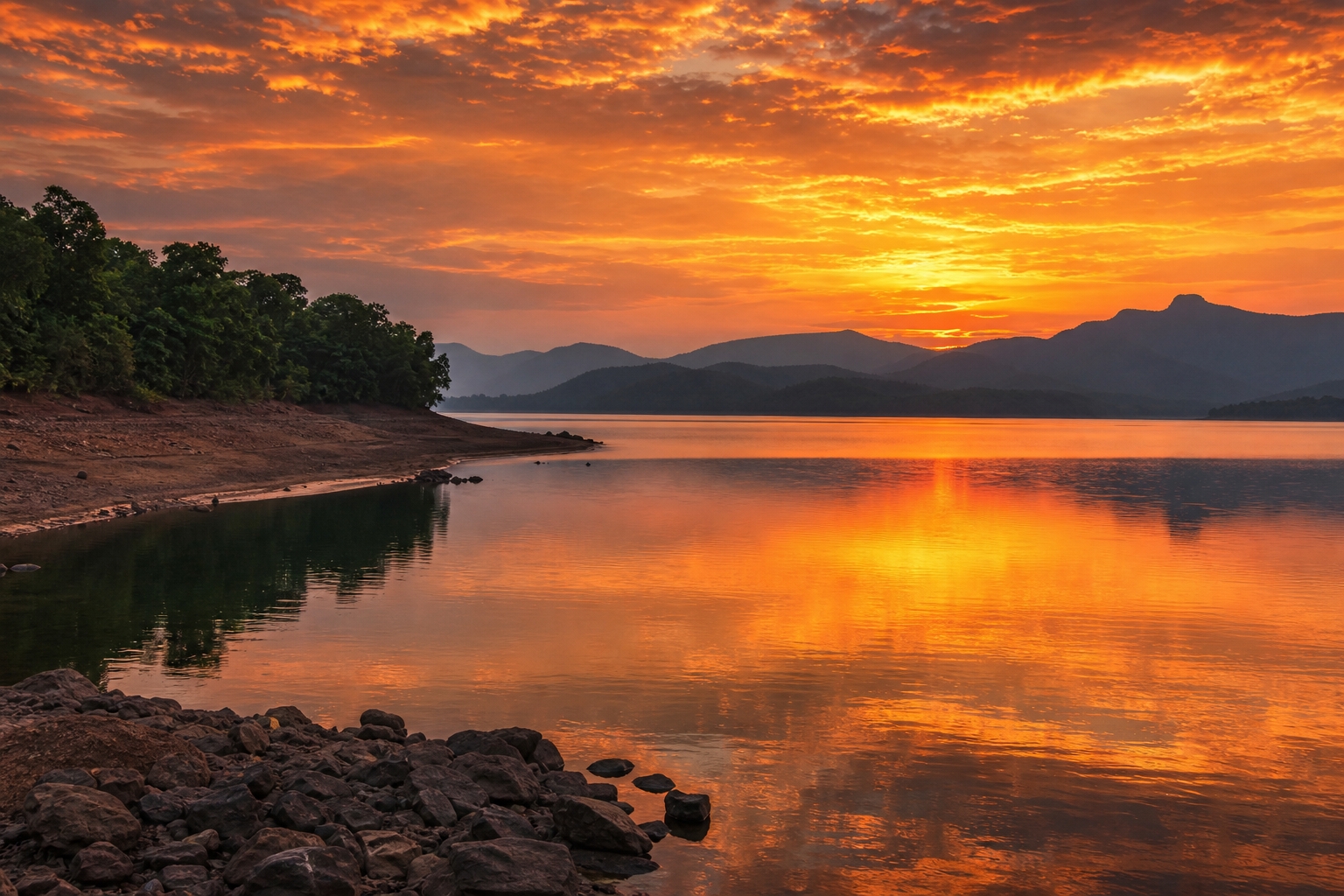
The Irai reservoir, created by the Irai Dam on the Irai River, forms the heart of a scenic wildlife sanctuary just 6 kilometres from Chandrapur city. The reservoir's shimmering waters are a critical drinking source for wildlife from nearby Tadoba, making it an excellent spot for casual wildlife watching without the need for a forest entry permit. The surrounding scrub forest and wetland habitats host crocodiles, monitor lizards, migratory waterfowl, kingfishers, and occasional visits from leopards and hyenas. The sunset views over the dam are among the most photogenic in the entire Vidarbha region.

Read More ↓

Gondpipri & Ramala Tank

The ancient town of Gondpipri, approximately 40 kilometres from Chandrapur, is revered as the spiritual birthplace of the Gond kings. The Gondpipri temple complex contains several beautifully decorated shrines and a large sacred tank known as Ramala, where pilgrims come to bathe and seek blessings. The annual fair at Gondpipri during the Navratri festival is one of the most colourful cultural events in the Vidarbha calendar, drawing tribal artisans, folk performers, and devotees from across the region. The surrounding countryside, dotted with bamboo groves and paddy fields, is scenically outstanding.

Discover Culture →

Junona Lake & Eco-Zone

Located on the buffer zone boundary of Tadoba Tiger Reserve, Junona Lake is a natural wetland of outstanding ecological importance. The lake area supports a thriving population of mugger crocodiles, and the surrounding grasslands and thorn forests are prime habitat for wild boar, spotted deer, blue bull (nilgai), and sambar. Unlike the core zone, the buffer zone around Junona can be explored on foot with a trained naturalist, making it an accessible option for travellers who may not have a full safari booked. Photography workshops and nature interpretation walks are available through several eco-lodges in the vicinity.

Plan Visit →
The grand stone gateway and fortified walls of ancient Chandrapur Fort, built by the Gond dynasty in Maharashtra

The Gond Kingdom: Chandrapur's Ancient Soul

Chandrapur is one of the most historically significant cities of medieval India, yet it remains frustratingly underrepresented in mainstream travel narratives. For nearly seven centuries, the region was the heartland of the Gond dynasty — a powerful clan of tribal kings whose kingdom at its peak extended across large parts of present-day Maharashtra, Madhya Pradesh, and Chhattisgarh.

The origins of the Gond presence in Chandrapur trace back to the early 13th century when King Ballal Shah established his capital here, naming it Ballalpur — the name by which it is still occasionally referenced in historical texts. The city's name Chandrapur is commonly believed to derive either from the crescent-shaped bend of the Irai River upon which the city was founded, or from a local deity associated with the moon (Chandra).

The Gond kings were sophisticated rulers who patronised art, architecture, and trade. Under their rule, Chandrapur became an important centre for cotton textiles, iron works, and the famous forest-product trade. The imposing fort they constructed — with its 11 principal gates, thick stone battlements, inner temples, and network of underground passages — stands as their most visible legacy.

Key Historical Sites

  • Chandrapur Fort Complex – 13th-century Gond fortification with 11 historic gates
  • Mahalaxmi Temple – Revered 700-year-old temple inside the fort
  • Anchaleshwar Mandir – Ancient Shiva temple on the Wardha riverbank
  • Ballarshah Temples – A cluster of medieval stone temples 15 km south
  • Gond Rajmata Samadhi – Memorial tomb of Gond royal queens
  • Mul Fort Ruins – 16th-century outpost fort 30 km east of Chandrapur

Tadoba Andhari Tiger Reserve – A Complete Safari Guide

Everything you need to know to plan the ultimate tiger safari in Maharashtra's most biodiverse wilderness.

Tadoba Andhari Tiger Reserve (TATR) is, without question, the crown jewel of Chandrapur and one of the finest wildlife sanctuaries in the entire Asian subcontinent. Established in 1955 as the Tadoba National Park — making it Maharashtra's oldest national park — and subsequently enlarged with the addition of the Andhari Wildlife Sanctuary in 1986, the reserve today encompasses a massive 1,727.59 square kilometres of pristine central Indian forest.

The name "Tadoba" is derived from the god Tadoba (also spelt Taru), a tribal deity worshipped by the Gond and Kolam tribes who have inhabited this landscape for centuries. Local legend holds that Taru, a village chieftain, was killed in an encounter with a tiger, and the sacred lake — Tadoba Lake — was created in his honour. The "Andhari" in the reserve's name refers to the Andhari River that flows through the sanctuary's heart, its dark wooded banks giving rise to the name (andhari meaning darkness in Marathi).

Safari Zones at Tadoba

Tadoba Gate (Core Zone)

The original and most famous entry point, offering access to Tadoba Lake — the reserve's busiest tiger territory. Evening safari drives here frequently yield tiger sightings around the lake edge, especially in the dry season (February–May) when water sources concentrate wildlife.

Moharli Gate (Core Zone)

Widely regarded as the most productive zone for tiger sightings, Moharli is home to several well-known tigress territories. The Pandharpauni meadow and Pandharpauni nallah are legendary tiger-watching spots. Advanced booking is essential, particularly for weekend safaris.

Kolara Gate (Core Zone)

A newer entry point offering less crowded forest trails through excellent leopard habitat. Kolara is particularly prized for wild dog (dhole) sightings and is one of the best zones for birdwatching, with sightings of grey-headed fish eagle, crested hawk-eagle, and Indian paradise flycatcher.

Navegaon Gate (Buffer Zone)

The buffer zone provides a more accessible and affordable safari experience, ideal for budget-conscious travellers or families. While tiger sightings are less frequent here, the zone delivers excellent encounters with leopards, sloth bears, and a rich assemblage of forest birds.

Agarzari Gate (Buffer Zone)

Agarzari is gaining popularity as a quieter alternative for wildlife photography. The zone's open grasslands support large herds of chital (spotted deer) and nilgai, and tigers are increasingly being recorded here as the core zone's population expands into buffer habitats.

Pangdi & Alizanza Gates

These newer buffer zone entry points are perfect for visitors who want a forest drive without a pre-booked permit. Forest department naturalists lead walks in designated areas, providing an immersive ground-level perspective of Tadoba's extraordinary biodiversity.

Wildlife You Can Spot at Tadoba

Big Cats & Canids

  • Royal Bengal Tiger (Panthera tigris tigris)
  • Indian Leopard (Panthera pardus fusca)
  • Dholes / Indian Wild Dogs
  • Indian Fox & Jackal

Large Mammals

  • Sloth Bear (Melursus ursinus)
  • Indian Gaur (Bison)
  • Sambar Deer, Spotted Deer (Chital)
  • Nilgai (Blue Bull), Wild Boar
  • Indian Python, Monitor Lizard

Birds (195+ Species)

  • Crested Serpent Eagle
  • Grey-headed Fish Eagle
  • Indian Roller, Malabar Pied Hornbill
  • Changeable Hawk-Eagle
  • Indian Pitta (migratory)
  • Lesser Adjutant Stork

Reptiles & Amphibians

  • Mugger Crocodile (Tadoba Lake)
  • Indian Star Tortoise
  • Bengal Monitor Lizard
  • Rock Python
  • Indian Cobra, Russell's Viper

Safari Booking & Practical Tips

Best Time to Visit

Tiger sightings peak from February to May. The reserve is closed from 1st July to 30th September (monsoon season). October to January offers lush green forests and cooler temperatures.

How to Book

Online bookings are mandatory through the Maharashtra Forest Department portal. Book at least 7–10 days in advance for core zones. Buffer zone permits are often available at the gate on the day.

Safari Timings

Morning Safari: 6:00 AM – 10:00 AM
Evening Safari: 2:30 PM – 6:30 PM
Each safari allows a maximum of 6 visitors per jeep plus driver and guide. Duration: approximately 3.5 hours.

Safari Costs (Approx.)

Core Zone: ₹4,500–₹6,000 per jeep (Indian nationals)
Buffer Zone: ₹1,500–₹2,500 per jeep
Foreign nationals: Additional entry fee applicable. Costs include guide fees.

What to Wear

Wear earth-toned, muted clothing (beige, khaki, olive, dark green). Avoid white or bright colours. Closed shoes are recommended. Carry a light fleece or jacket for early morning safaris, even in summer.

Photography Tips

Bring a telephoto lens (minimum 300mm equivalent). Keep camera settings on burst mode. Maintain absolute silence during animal sightings — never shout or use flash photography. A bean bag for lens stabilisation is invaluable on bumpy forest roads.

Breathtaking sunset over Irai Dam reservoir near Chandrapur, Maharashtra, with vibrant orange sky reflected in still waters

Nature Beyond the Forest: Chandrapur's Hidden Landscapes

While Tadoba rightly commands most of the travel spotlight, Chandrapur district harbours a remarkable variety of natural landscapes that reward the curious traveller who ventures beyond the tiger reserve boundary. The Wardha and Wainganga rivers carve dramatic valleys through the Deccan terrain, creating scenic gorges, seasonal waterfalls, and fertile floodplains teeming with birdlife.

The Irai Dam, constructed on the Irai River as a water supply project for the city, has created an expansive reservoir that functions as a de facto urban wildlife sanctuary. Early-morning birdwatchers regularly record 60–80 species in a single visit, including painted storks, open-billed storks, purple herons, various egrets, and in winter, spectacular rafts of migratory waterfowl including common teals, pintails, and the occasional greater flamingo.

Further afield, the Chanda Forest Division — which surrounds Chandrapur on three sides — contains several protected patches of forest managed for biodiversity conservation. The Navegaon-Nagzira Tiger Reserve, approximately 80 kilometres to the east, forms part of the same contiguous Central Indian forest landscape and can easily be combined with a Chandrapur itinerary for a comprehensive Vidarbha wildlife experience.

Natural Attractions Near Chandrapur

  • Irai Dam & Reservoir – Picnics, birdwatching, crocodile spotting (6 km)
  • Wardha River Gorge – Rock climbing and seasonal trekking routes
  • Mul Waterfall – Scenic seasonal cascade 35 km east
  • Asola Bhati Forest – Quiet nature walks in reserve forest
  • Sawangi Eco-Tourism Zone – Boat rides and nature interpretation

Food, Culture & Festivals of Chandrapur

Savour the bold flavours of Vidarbha cuisine and immerse yourself in the living cultural traditions of the Gond heartland.

Vidarbha Cuisine: A Bold Culinary Heritage

The food of Chandrapur and the wider Vidarbha region is fiercely distinctive — characterised by the liberal use of dry coconut, sesame seeds, peanuts, and a unique chilli-laden spice mix that gives the food a depth and heat quite different from the more widely known Puneri or Kolhapuri traditions of western Maharashtra.

The Saoji cuisine of Chandrapur and Nagpur deserves special mention. Originating from the Halba-Koshi Saoji community — traditional weavers who settled in Vidarbha — Saoji cooking is defined by its extraordinary use of spices: anywhere between 20 and 35 different whole spices may be ground together to make the signature Saoji masala. The resulting curries are intensely aromatic, deeply coloured, and deliver a complex heat that builds slowly and lingers long. Saoji Mutton Curry and Saoji Chicken are considered bucket-list dishes for serious Indian food enthusiasts.

Beyond Saoji, the everyday food of Chandrapur reflects the agricultural abundance of the region. Zunka Bhakar — a dry chickpea flour preparation eaten with thick jowar (sorghum) flatbread — is the quintessential working-class meal of Vidarbha, hearty and satisfying. Varan Bhat (simple dal and rice) prepared with the black-eyed peas or red lentils grown locally has a comforting simplicity that belies its deep flavour.

Must-Try Dishes in Chandrapur

  • Saoji Mutton Curry – Intensely spiced slow-cooked mutton, a Chandrapur speciality
  • Zunka Bhakar – Chickpea flour preparation with jowar flatbread
  • Patodi Rassa – Besan (gram flour) dumplings in a tangy, spicy gravy
  • Shevgyachi Bhaji – Drumstick vegetable in a dry masala preparation
  • Sabudana Khichdi – Fasting dish of tapioca pearls with peanuts and green chilli
  • Puran Poli – Sweet flatbread stuffed with jaggery and lentil filling
  • Thalipeeth – Multigrain flatbread, best eaten hot off the tawa
  • Gondhal – Traditional tribal sweets made during festivals

Festivals & Cultural Events

Chandrapur's festival calendar is a vivid reflection of its cultural complexity — part Hindu, part tribal Gond, part syncretic tradition that has evolved over seven centuries of coexistence. The Mahalaxmi Yatra, held each year in the month of Ashwin (September–October), is by far the largest and most important festival, drawing over half a million devotees to the Mahalaxmi Temple over its 13-day duration. The yatra features chariot processions, folk performances, devotional music, and a sprawling fair that fills the ancient fort area with colour and activity.

The Gondi tribal festivals of the surrounding villages offer a window into one of India's most ancient living cultures. Festivals such as Karma, Navakhani (new harvest), and Keslapur Jatara are celebrated with elaborate rituals, ceremonial music played on traditional instruments like the dhol, mandar, and tuddum drum, and communal feasting. Visitors who time their trip to coincide with these festivals will experience something that exists almost nowhere else in the world — a living tribal culture that has maintained continuity with its pre-historic roots.

Annual Festival Calendar

Jan–Feb
Makar Sankranti — Kite festivals and sesame-jaggery sweet exchanges throughout the city
Feb–Mar
Holi & Rang Panchami — Vibrant colour festival, particularly celebrated in Chandrapur's historic quarters
Apr–May
Gondhi Jatara — Tribal fair at Gondpipri with traditional performances
Sep–Oct
Mahalaxmi Yatra — Chandrapur's biggest festival drawing 500,000+ pilgrims
Oct–Nov
Diwali & Balipratipada — Five-day festival of lights with spectacular illuminations
Nov–Dec
Kartik Purnima — Sacred river bath at Wardha and Anchaleshwar temple fair

How to Get to Chandrapur & Getting Around

Complete practical travel information to help you plan a seamless Chandrapur journey.

By Air

The nearest commercial airport to Chandrapur is Babasaheb Ambedkar International Airport (NAG) in Nagpur, approximately 150 kilometres to the northwest. Nagpur is well-connected to all major Indian cities including Mumbai (1 hour), Delhi (1.5 hours), Hyderabad (45 minutes), Bengaluru, Chennai, and Kolkata. Several international flights also operate from Nagpur to Dubai, Singapore, and Bangkok. From Nagpur airport, the most convenient option to Chandrapur is a pre-booked taxi or cab service, which takes approximately 3–3.5 hours depending on traffic. MSRTC state buses also connect Nagpur to Chandrapur frequently.

By Train

Chandrapur Railway Station is located on the important Nagpur–Ballarshah rail line (part of Central Railway's Nagpur Division), making it directly accessible from numerous cities across India. The Gondwana Express, Sevagram Express, and Dakshin Express are among the key trains serving Chandrapur. Direct or easy-connection trains are available from Mumbai (approximately 16 hours), Hyderabad (8 hours), Pune (16 hours), and Delhi (18–20 hours). The railway station is centrally located and auto-rickshaws are readily available outside. Book train tickets in advance through IRCTC for popular routes and dates.

By Road

Chandrapur is well connected by road, sitting at the junction of NH-930 and NH-353E (formerly NH-6). The Maharashtra State Road Transport Corporation (MSRTC) operates frequent semi-luxury and sleeper bus services from Nagpur (3–3.5 hours), Nagpur (3.5 hours), Hyderabad (7–8 hours), Pune (14 hours), and Mumbai (16–18 hours). Private Volvo bus services also operate on the Nagpur–Chandrapur–Hyderabad corridor. Travelling by car allows you the flexibility to make stops at scenic viewpoints along the Wardha River valley and is highly recommended if you plan to explore multiple safari gates at Tadoba.

Getting Around Chandrapur

Within Chandrapur city, auto-rickshaws are the most popular and affordable mode of transport, easily hailed on most streets. Shared autos (tempos) operate on fixed routes within the city at very low fares. Cycle-rickshaws are available in the older city areas near the fort. For Tadoba safaris, most travellers use pre-arranged jeep services through their lodge or a local operator — these typically include transport from the city to the gate and back. Self-drive car hire (with driver) is available from Chandrapur and Nagpur for maximum flexibility. Cab apps like Ola and local taxi aggregators serve the city.

Where to Stay in Chandrapur

Accommodation options in Chandrapur range from budget guesthouses in the city centre to premium eco-lodges on the boundary of Tadoba Tiger Reserve. Choosing the right base significantly shapes the character of your visit.

Eco-Lodges & Forest Camps (Tadoba)

For the ultimate wildlife experience, stay in one of the many eco-lodges situated on the boundary of Tadoba's core or buffer zones. These properties typically offer all-inclusive safari packages that include accommodation, meals, jeep safaris, and naturalist services. Standards range from comfortable tented camps to luxury boutique lodges with swimming pools and spa facilities. Notable areas to look for accommodation include Moharli village, Kolara village, Navegaon, and Tadoba village.

Price range: ₹4,000–₹25,000 per person per night (all-inclusive packages)

Mid-Range Hotels (Chandrapur City)

Several well-maintained mid-range hotels operate in Chandrapur city, ideal if your primary interest is heritage and culture rather than wildlife. City hotels offer better connectivity, local dining options, and easy access to the fort, temples, and market areas. The drive to Tadoba from the city (45 minutes) is manageable if you are willing to make an early morning departure.

Price range: ₹1,200–₹4,000 per night

Budget & Backpacker Options

Budget travellers are well catered for with several affordable dharamshalas (pilgrims' rest houses) near the Mahalaxmi Temple, inexpensive guesthouses near the railway station, and a handful of backpacker-friendly hostels. Maharashtra Tourism Development Corporation (MTDC) also operates a reasonably priced tourist resort in Chandrapur that represents excellent value for independent travellers.

Price range: ₹500–₹1,200 per night

Best Time to Visit Chandrapur

Chandrapur's seasons each offer a distinct and rewarding experience — choose the one that matches your travel style.

Winter (October – February)

15°C – 30°C

Best for: Wildlife safaris, heritage exploration, cultural festivals, photography

The cooler, dry months of October through February represent Chandrapur at its most accessible and comfortable. Daytime temperatures are pleasant, making long jeep safaris and fort walks enjoyable. Winter is prime season for migratory birds at Irai Dam, and tiger sightings in Tadoba begin to increase as the dense monsoon foliage thins out and wildlife starts concentrating around permanent water sources.

Recommended ✓

Summer (March – June)

28°C – 48°C

Best for: Tiger sightings, serious wildlife photography

Chandrapur's summers are intensely hot — temperatures regularly exceed 42°C in May and June, and the region occasionally records some of Maharashtra's highest temperature readings. Despite the heat, March–May is considered peak tiger season at Tadoba, as the forest vegetation dies back and animals congregate around the shrinking water holes. Experienced wildlife photographers specifically plan visits during this period for guaranteed tiger sightings and dramatic photography conditions. Stay hydrated and time safari drives for the coolest parts of the day.

Tiger Season 🐯

Monsoon (July – September)

22°C – 35°C

Best for: Waterfalls, lush scenery, cultural immersion, off-season rates

The southwest monsoon arrives in Chandrapur in mid-June and transforms the landscape dramatically — from golden-brown and dust-dry to an extraordinary emerald-green canvas, dotted with seasonal waterfalls and filled with the sound of frogs and cicadas. Note that Tadoba Tiger Reserve is closed during this period (July 1 – September 30). However, the fort, temples, and cultural sites remain open, and the city itself takes on a festive character as the Gondi harvest festivals begin. Accommodation rates drop significantly during monsoon, making it attractive for budget travellers interested primarily in heritage.

Safari Closed

Essential Travel Tips for Chandrapur

Practical advice from experienced travellers to help you make the most of your Chandrapur visit.

01

Book Tadoba Safaris in Advance

Core zone safari permits at Tadoba — especially for the Moharli and Tadoba gates — sell out weeks ahead of time, particularly on weekends and during peak season (February–May). Book your permits online through the Maharashtra Forest Department e-booking portal as soon as your travel dates are confirmed. Buffer zone permits are generally available 24–48 hours before safari time but can also fill up during school holiday periods.

02

Hire a Certified Naturalist

All safaris include a mandatory guide, but the quality of wildlife interpretation varies enormously. Specifically request a BNHS-certified or NWAC-trained naturalist through your lodge for the best experience. A skilled naturalist will interpret animal signs, identify birds, explain forest ecology, and dramatically improve your chances of rewarding wildlife encounters.

03

Respect Wildlife & Forest Rules

Inside Tadoba, strict silence is mandatory when animals are nearby. Avoid making sudden movements or standing up in the jeep. Food, drinks, and plastic bags are strictly prohibited inside the forest. Violations attract heavy fines and can result in your safari being terminated without refund. The forest is a home — be a respectful guest.

04

Carry Local Currency

While larger hotels accept cards, many guesthouses near Tadoba, local eateries, and market shops in Chandrapur operate on a cash-only basis. ATMs are available in Chandrapur city and at Mul and Chimur towns near the tiger reserve, but they can be unreliable. Carry sufficient Indian Rupees for at least your first two days of expenditure.

05

Stay Hydrated & Sun-Safe

In summer and winter alike, Chandrapur's sun can be intense. Carry a reusable water bottle and a sun hat on all outdoor excursions. During summer safaris, fill a thermal flask with cold water the night before — ice is often unavailable near the reserve. A light scarf or buff is useful for protecting the face from forest dust during jeep drives.

06

Explore Beyond the Tiger Reserve

Many visitors focus entirely on Tadoba and miss Chandrapur's outstanding heritage, temples, and cultural life. Allocate at least half a day for the Chandrapur Fort and Mahalaxmi Temple, another half-day for the Irai Dam, and if time permits, a day excursion to Gondpipri and Ballarshah. The combination of wildlife, history, and culture is what truly makes Chandrapur exceptional.

07

Health & Medical Precautions

Chandrapur is located in a malaria-endemic region. Consult your doctor about prophylaxis before travelling, and use DEET-based mosquito repellent, especially during dawn and dusk. A basic first-aid kit is advisable. The nearest well-equipped hospital is in Chandrapur city; for serious medical emergencies, Nagpur is the closest major medical centre. Travel insurance with medical evacuation coverage is strongly recommended.

08

Learn a Few Marathi Phrases

While English and Hindi are understood in tourist-facing businesses, knowing a few words of Marathi goes a very long way in building genuine connections with locals. Simple phrases like Namaskar (hello/greeting), Dhanyawad (thank you), and Eka plate varan bhat (one plate dal rice please) will earn you warm smiles and, often, much better service and pricing at local eateries.

Shopping & Local Crafts in Chandrapur

Take home a piece of Chandrapur's rich artisanal heritage — from handcrafted tribal art to aromatic spice blends.

Chandrapur's markets offer a delightful range of locally produced goods that make for meaningful souvenirs and gifts. The Mahalaxmi Temple Market Street, the Rajura Road market area, and the Civil Lines bazaar are the main shopping districts, best explored on foot in the cooler hours of morning or evening.

🎨 Gond & Warli Art

Hand-painted tribal artwork by local Gond and Warli artists. Intricate geometric and nature-inspired patterns rendered on paper, cloth, and wooden panels. Prices range from ₹200 for small prints to several thousand rupees for large original canvases.

🌶️ Saoji Spice Blends

The famous Saoji masala mix — the secret behind Chandrapur's legendary spicy cuisine — is available pre-packaged from several specialty spice shops. An excellent edible souvenir that lets you recreate authentic Vidarbha flavours at home.

🧵 Handloom Textiles

The Saoji weaver community has traditionally produced beautiful handloom fabrics. Chandrapur's markets stock hand-woven cotton sarees, dupattas, and fabric lengths in traditional Vidarbha patterns and natural dyes.

🪵 Bamboo & Wood Crafts

Local tribal artisans produce beautiful bamboo baskets, wooden kitchen implements, and decorative items using sustainable forest materials. Look for these at the weekly tribal artisan market held near the collectorate area.

🍯 Forest Produce & Honey

Wild forest honey collected by tribal communities from Tadoba's buffer zone forests is available at select fair-trade outlets in Chandrapur. Pure, unprocessed, and with a distinctive floral character from the teak and mahua blossoms — an extraordinary flavour.

📿 Religious Artefacts

The shops surrounding the Mahalaxmi Temple sell devotional items including small brass idols, coconut shell crafts, flower garlands, and silver-thread temple jewellery that makes for unique cultural souvenirs.

Frequently Asked Questions

Quick answers to the most common questions about travelling to Chandrapur.

What is the best time to visit Chandrapur for tiger sightings?

For the best chance of seeing tigers, visit between February and May. During these months the forest vegetation is sparse, temperatures are high, and tigers frequently visit the waterholes — making sightings almost inevitable in certain zones like Moharli. October to January also provides reliable sightings with more comfortable weather. The reserve is closed from 1st July to 30th September.

How many days should I plan for a Chandrapur trip?

A minimum of 3 days and 2 nights is recommended to experience both Tadoba Tiger Reserve and Chandrapur's heritage sites. For a comprehensive experience — covering multiple safari zones, the fort, temples, Irai Dam, and local food — plan for 5–7 days. Serious wildlife photographers sometimes spend 7–10 days to allow for multiple safari drives and varying forest conditions.

Is Chandrapur safe for solo women travellers?

Chandrapur is generally considered safe for solo women travellers by Indian travel standards. Tadoba eco-lodges are well-managed and welcoming to all travellers. Standard precautions apply: avoid isolated areas at night, dress conservatively in temple and market areas, and use trusted transport options. The city's tourist-facing hospitality sector — guesthouses, lodges, and restaurants — is accustomed to solo travellers of all genders.

Can I visit Tadoba Tiger Reserve without a guide?

No. Entry to both the core zone and buffer zone of Tadoba Andhari Tiger Reserve requires a registered guide to accompany all safari vehicles at all times. This is a mandatory rule enforced by the Maharashtra Forest Department for both safety and conservation reasons. Guides are assigned at the gate and their fee is included in the safari permit cost. Requesting an experienced naturalist guide through your lodge in advance is highly recommended.

What is the nearest airport to Chandrapur?

The nearest major commercial airport is Babasaheb Ambedkar International Airport (NAG) in Nagpur, approximately 150 kilometres from Chandrapur city. The drive takes roughly 3–3.5 hours. Nagpur has excellent flight connections to all major Indian cities and several international destinations. A smaller domestic airstrip at Gondia (80 km north-east) occasionally handles charter and regional flights.

Are children allowed on Tadoba safaris?

Yes, children are allowed on jeep safaris at Tadoba. There is no minimum age restriction, though children must be able to sit quietly and remain calm during wildlife sightings. Most responsible parents consider children above age 6–7 as being well-suited for safari experiences. Lodges often provide special children's activity programmes including nature interpretation, wildlife drawing sessions, and birdwatching walks.

What currency and payment methods are accepted?

The official currency is the Indian Rupee (INR). ATMs are available in Chandrapur city and in larger towns near Tadoba (Mul, Chimur). Card payments are accepted at most hotels and larger restaurants in the city, but smaller eateries and market vendors operate on cash-only basis. UPI (Google Pay, PhonePe) is widely accepted even at small shops. Carry adequate cash, especially if venturing into rural areas near the reserve.

What language do people speak in Chandrapur?

The primary language is Marathi, the official language of Maharashtra. Hindi is widely understood and spoken throughout the city and at tourist sites. In the tribal communities surrounding Chandrapur, Gondi, Halbi, and Kolami languages are spoken. At Tadoba and most tourist-facing businesses, English is spoken to a functional level, though proficiency varies. Having a translation app on your phone is helpful for deep exploration of local markets and villages.

Nearby Destinations to Combine with Chandrapur

Chandrapur sits at the heart of some of central India's most remarkable travel destinations — perfect for extended itineraries.

Nagpur – The Orange City

150 km | 3 hrs drive

Maharashtra's second-largest city and the geographical centre of India, Nagpur is both a convenient transit hub and a destination in its own right. Visit the Deekshabhoomi monument — one of Buddhism's most important sites in India — explore the Sitabuldi Fort, discover the sprawling Dragon Palace Buddhist temple, and sample the city's famous Nagpur oranges and sweet Halwa Puri breakfast. Nagpur also hosts Futala Lake, the Ambazari Garden, and the Maharaj Bagh Zoo.

Navegaon-Nagzira Tiger Reserve

80–100 km | 2 hrs drive

Forming part of the same Central Indian tiger landscape, Navegaon-Nagzira Tiger Reserve (NNTR) across the border in Gondia district offers a wonderfully quiet, less-crowded alternative (or complement) to Tadoba. The reserve's picturesque Navegaon Lake is home to a large population of mugger crocodiles and an impressive assemblage of waterbirds. Tigers, leopards, wild dogs, and gaur are regularly sighted. NNTR's low tourist footfall makes it particularly attractive for wildlife photography enthusiasts seeking solitude.

Pench Tiger Reserve

200 km | 4 hrs drive

Pench Tiger Reserve, straddling the Maharashtra-Madhya Pradesh border, is the setting for Rudyard Kipling's immortal The Jungle Book — and visiting it feels appropriately legendary. Pench's mixed teak and bamboo forests host tigers, leopards, Indian wild dogs, and enormous herds of gaur. The reserve is less commercial than some better-known parks and retains a genuine sense of wilderness adventure. Combined with Tadoba in a single itinerary, Pench creates an extraordinary central Indian wildlife circuit.

Bhadravati & Mul

30–50 km | 45 min drive

The industrial town of Bhadravati, famous for its historic Chandrapur–Bhadravati steel complex, also houses the beautiful Mul town nearby with its collection of medieval step-wells and Hemadpanthi temples. The Mul Fort ruins provide an atmospheric heritage excursion suitable for a morning trip from Chandrapur. The route along the Wardha River between Chandrapur and Mul is particularly scenic in the post-monsoon season.

Ramtek – The Temple Hill

160 km | 3 hrs drive

Ramtek, a small historic town near Nagpur, is famous for its hilltop temple complex dedicated to Lord Ram — one of the most important Ramayana pilgrimage sites in Maharashtra. The poet-saint Kalidasa is said to have written his classical Sanskrit poem Meghaduta (The Cloud Messenger) here. The fortified temple complex, ancient tanks, and medieval architecture make Ramtek an excellent cultural addition to a Chandrapur itinerary.

Warora & Wirur

40 km | 50 min drive

The town of Warora, one of the oldest settlements in Chandrapur district, contains several interesting temples and an active Jain pilgrimage site at nearby Wirur. The Wirur Jain temple complex, built in traditional Dravidian style, features intricate marble carvings and is an important place of worship for the region's Jain community. The drive from Chandrapur through the Warora-Wirur corridor passes through pastoral Vidarbha countryside that is charming and photogenic in the post-monsoon season.

Ready to Explore Chandrapur?

From the roar of a tiger at dawn in Tadoba to the fragrance of jasmine garlands at the Mahalaxmi Temple, Chandrapur offers experiences that will stay with you for a lifetime. Start planning your journey today.

Plan a Safari Travel Information